Showing posts with label sulawesi. Show all posts

Tuesday, 1 July 2014

I Sea

Makassar, Sulawesi island and Surabaya, Java island, Indonesia 

In this blog: the only white face on a long cross-sea ferry, and a trip to a cigarette factory


-----------------------------------------------------------

Despite only making a couple of stops on the Britain-sized island of Sulawesi there was little else in the south to hold my interest following the amazing previous week in the Tana Toraja region, and the following few days were a bit of a slow, frustrating and slightly boring mix of buses, boats and trains but as ever with Indonesia, things are never completely dull.

Countryside on the way south from Rantepao


Rene and I heading to Makassar

Heading South
From Tana Toraja, Canadian Rene and I took a bus south to Makassar, a ten hour journey on one of the most luxurious buses I'd ever been on and set off just twenty minutes late, a total contrast to the discomfort of previous Indonesian journeys. The scenery was beautiful the whole way, starting with small rolling valleys scattered with Torajan houses with their majestic curved roofs. The scenery became more mountainous after a couple of hours with grassy and rocky peaks either side of the bus, and with the freezing cold aircon on the bus I felt like I was on top of those summits. It got me thinking 'cause this has happened many times in Asia - just like we Brits see heat as a luxury, it seems to me that Asians particularly in hot developing countries see coldness as a rare luxury and completely overindulge on it when they have chance. Eventually the landscape flattened out and for a few hours we saw nothing but huge green paddy fields both sides of the road with villages every so often, the houses having a very different style of architecture again. Strangely the driver drove for six hours straight with no toilet or lunch stop so by the time we got to Makassar I was both bursting and famished in equal measure. It didn't help either that we were dropped at the depot somewhere way out in the suburbs in the dark, but after a bit of walking and guesswork we flagged down a passing share taxi that was heading to the centre and all was well.

Makassar itself was to be nothing more than a transit point I decided. It was a big messy sprawling city with only a few places of interest to the traveller, so for the night and morning we were there I decided to eschew sightseeing and catch up on a few things instead before catching the boat. I was heading next to the main island of Indonesia; Java, and having found all the flights way too expensive plumped for the ferry instead. After all, with so many islands in Indonesia ferries are the lifeblood of the country, so it would be an experience in itself I decided. And it was. Rene had to go to the Indonesian capital, Jakarta for a few days to apply for a visa for India, so it was back to solo travelling for a few days, but just as we said cheers for now and checked out of the hotel, we were hit with a bill for the minibar. We'd not touched it but they were insistent we pay, and things got a bit tense for a few minutes. In the end I had to get to the port and left Rene to sort it out, thankfully for them to admit it was their fault I learnt later.


---

All Aboard
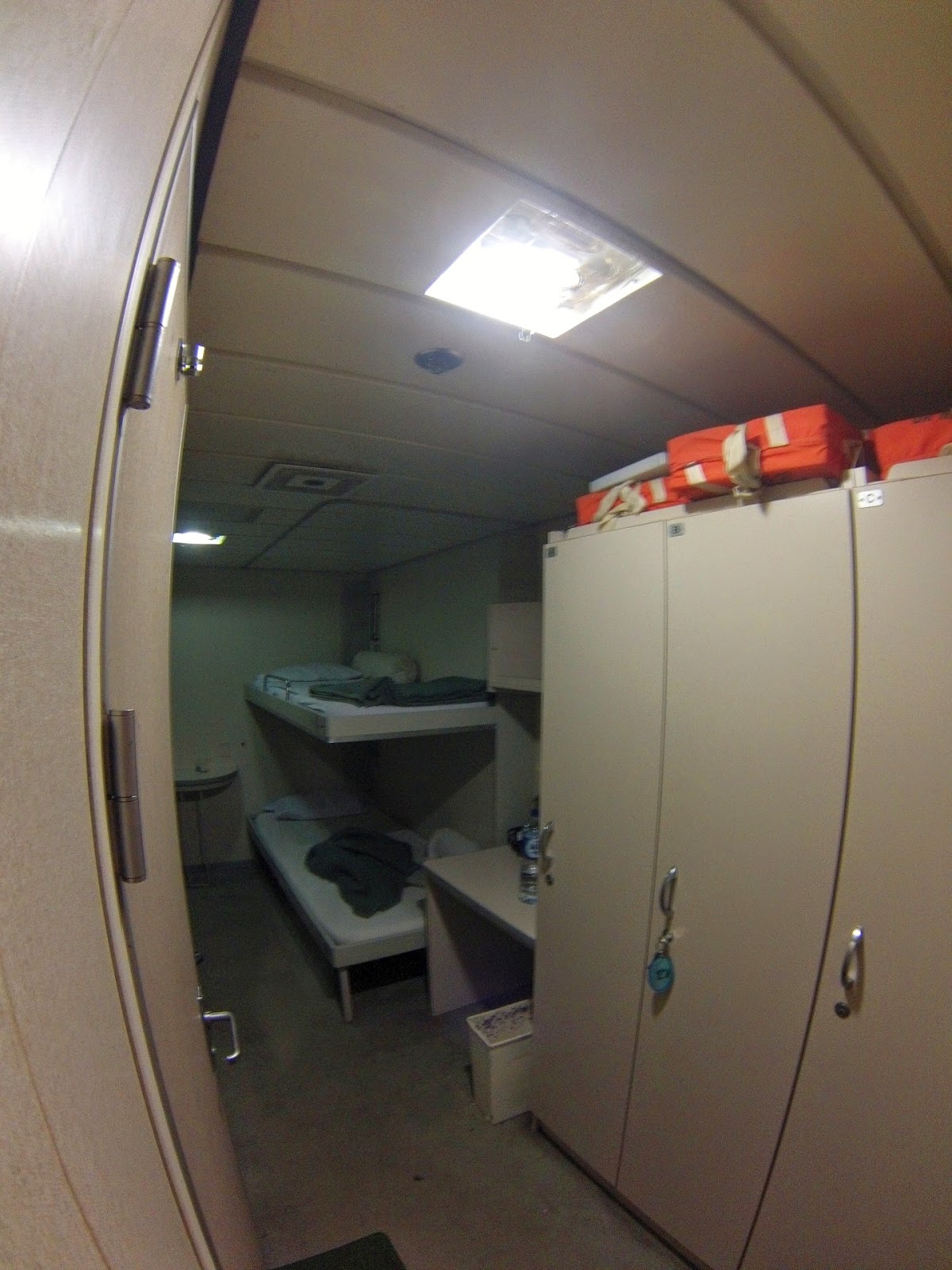
I really wasn't sure what the ferry experience would be like, but knowing that the economy class consists of hundreds of people sleeping on mats in giant rooms, I paid a bit more for a second-class cabin. I was a bit taken aback at first stepping on the ship, finding a dirty dimly-lit corridor full of people and boxes of luggage rather than the nice big lobby I ridiculously imagined. It was a confusing jumble of stairs and passages, but thankfully a staff member led me to my cabin which turned out to be exactly what I wanted; simple, functional and clean. Everywhere I wandered on the ship there were people, every passageway, open deck, corner, stairwell and bench contained folks laying on the floor, on their way back to see their families or earn their riches in another part of the country, unable to afford anything better than the most basic class. 

Everyone stared as I passed and initially I felt pretty uncomfortable but soon got used to it. Even opening the cabin door involved someone moving out the way to let me past, and unsurprisingly I was the only westerner out of the hundreds if not thousands of people on this ship. Now normally on the streets, where people have at least something to do I might get the odd 'hello mister' in my direction, but here people had nothing whatsoever to occupy their attention and I became even more of a curiosity than normal to them, with heads turning, whispers muttered and 'hello mister where you come from?' echoing constantly. Unfortunately England had been knocked out of the World Cup the day before and when I told them my native place I was constantly reminded of this fact! Indonesians really do love football.

The only free space on the ship
People everywhere on board

Leaving port an hour later than scheduled, it was quite pleasant sat there on the floor of the upper deck, watching Makassar disappear into the distance then small islands pass by, as well as huge cargo ships and tankers. The only place I could really get any space though was sitting in a lifeboat which I spotted hanging off the top edge of the boat with no barriers across, a perfect place to read and relax. Peace! Space! Once the sun had set the Muslim 'call to prayer' played over the ship's PA system, and I headed for a shower and food. Despite meals supposedly being included in the ticket, for some reason the second-class restaurant (nice name!) wasn't serving that evening and sent me downstairs to economy class, where I squeezed my way through the cattle market of people only to receive an overpriced plate of tepid rice and what might possibly have been chicken. Luckily it was all back to normal the next day and I got a decent feed. 

Despite it being a twenty-four hour crossing time passed surprisingly quickly and I actually quite enjoyed the experience. My plans of getting up-to-date with writing as well as finishing a book slipped away unfinished, and mid-afternoon we floated into the harbour at Surabaya - a huge industrial city of smoking chimneys, big factories, storage silos, and hundreds of parked-up cargo ships. 


---

Docking at Surabaya
I knew Surabaya had little to offer but hadn't got round to planning further ahead, to know where I was headed next so decided to stay a night. The port was a bustling frenzy of people and baggage squeezing into packed minibuses and cars, but strangely none seemed to go to the city centre. The language barrier made it even more confusing so tired of asking I set off on foot, eventually finding a share taxi which took me at least come of the way to a hotel before I guess-walked the rest. The room was nothing special with a lack of windows, no shower and a sink tap which didn't work, but choice was limited and it had to do. After the food on the ship I craved western-food, and with the biggest range of grub I could ever imagine available in a huge nearby mall I found just what I wanted. I'd planned to leave town straight away the following morning, but after some research a couple of interesting-sounding sights changed my mind. 

I've mentioned before that Indonesians are massive smokers, some of the biggest puffers in the world I reckon. Its a dirt cheap hobby here, and adverts appear everywhere on the streets, media and even train station departure boards. Whilst I hate smoking myself, the ever-so-Indonesian tourist attraction of a cigarette museum and factory tour sounded too interesting to miss so I took a becak - a cycle rickshaw - to the House of Sempoerna a couple of miles away. Sempoerna are one of the most popular brands of cigarettes here, and in this factory about four-hundred women hand roll up to four-thousand tobacco and clove mix cigarettes each per day. Unfortunately I arrived on a Sunday, a day which they'd somewhat considerately taken off, so saw just an empty factory and a video but it satisfied my curiosity just about enough anyways. The adjoining museum was funny even if it didn't indeed to be, full of curiosities, paintings and photos of people smoking and some company history, all in an old-fashioned 'Guinness Is Good for You!' manner that blissfully ignored the fact that smoking has killed the odd person. 


---

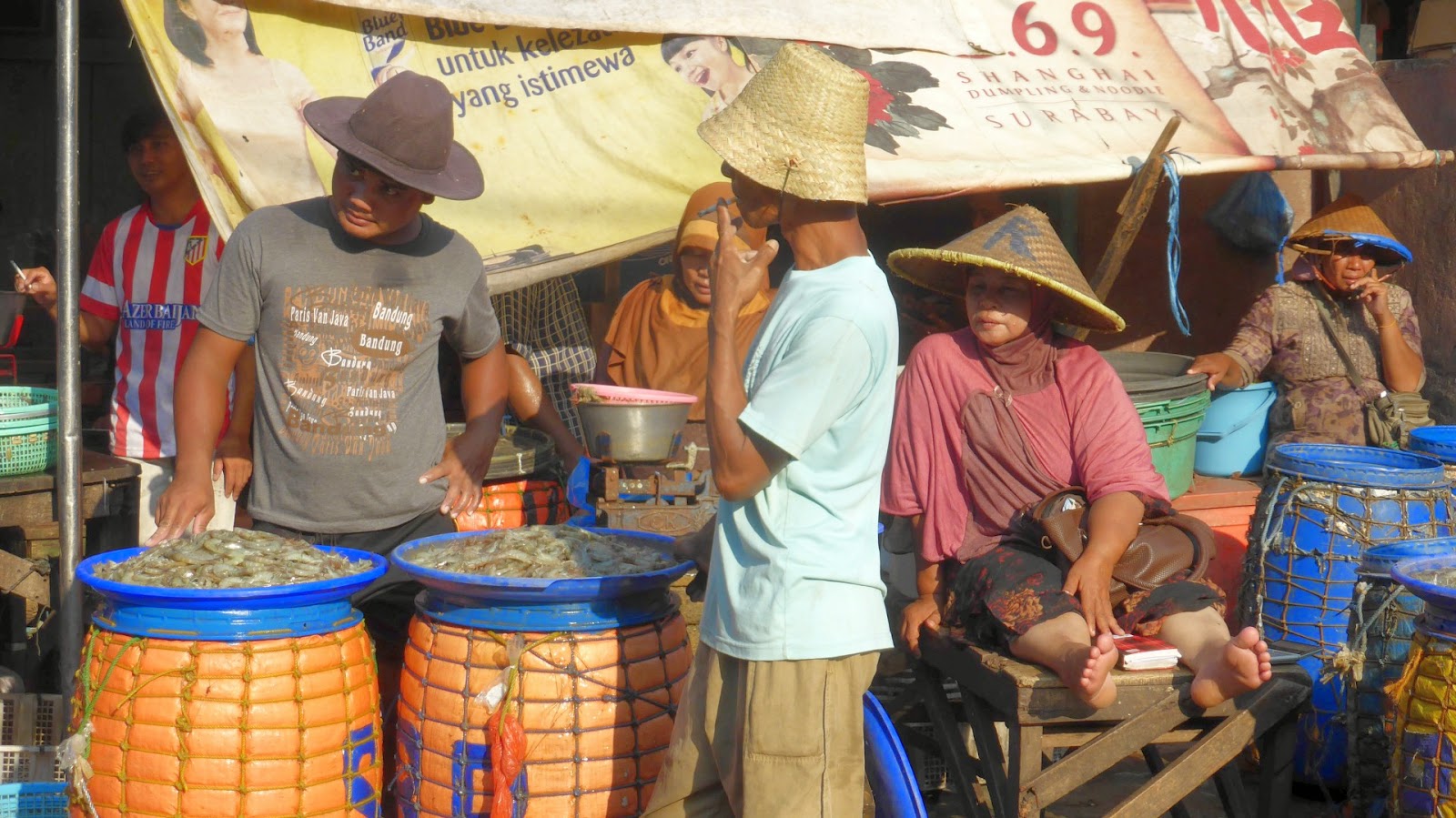
I took another becak (for novelty value mostly) to the Arab quarter of town which was full of busy narrow passages full of traditionally-dressed Muslims shopping or heading to the nearby mosque, but apart from that not a lot of Arabian feel in reality. It was interesting enough but didn't really grab me so I continued to a Chinatown nearby. Surabaya is the first place in Indonesia that I've seen any Chinese faces, but in reality the district is just like any other these days. The streets were pretty grotty and the Dutch-colonial era buildings crumbling, but the huge fish market was really interesting, a hive of activity. Men carried in huge plastic drums of fresh fish, and there was a real variety on offer that I'd not really seen before, including stingrays and barracuda. Next door was a huge shed where women sorted and shelled garlic cloves and around the corner an interesting chicken market, and I wandered amongst it all for a while seeing a few quite unique sights.

I'd planned to leave town on a 4pm train to the city of Malang, but ran out of time and decided on a later one instead. Heading to catch that one I arrived at the wrong station, and after a race across town reached the correct place one minute late. Now, I've been on time for everything until now, yet every single bit of transport I've taken in Indonesia has been late leaving - sometimes twenty minutes sometimes a couple of hours. Yet here I am, one minute late, and it had already gone. Almost  predictably though, when I caught the next train it left nearly an hour late! In the meantime though I headed for some food, on the way catching a free open air rock gig then on the way back, spending a quarter hour looking around an ex-Russian submarine used by the Indonesian Navy, now retired in a city park. Missing the train wasn't so bad after all.

Boarding the ferry from Sulawesi to Java island
Digs on the ferry


Oil rigs way out to sea (and yes I need to get

the dust out from inside my camera!)

Welcome to Surabaya

Sampoerna cigarette factory

Outside the fish market in Surabaya Chinatown

Torpedo tubes on the ex-Russian, retired Indonesian navy submarine

Thursday, 26 June 2014

Three Funerals and a Wedding - Part II

Rantepao, Sulawesi island, Indonesia (map)

In this blog: a huge water buffalo market, a cave graveyard, being invited into a wedding, and buffalo fighting 


-------------------------------------------------------------

Tana Toraja is a region in Indonesia that's home to an ethnic group known as the Torajans, who have some very unique traditions and possibly the most elaborate funeral ceremonies in the world. This follows part one and is equally morbid, so I suggest you read that first to understand what this strange ol' place is all about.

Rene and I with a mega-expensive and rare Albino water 
buffalo, prized by the Torajan people

Market Day
Gustine is a local Torajan girl who my travel buddy Canadian Rene had bumped into on our first day in Rantepao -  a 21 year old studying for a degree in English, and as I'd helped her out by teaching an English class to some local kids, she offered to take us around the local area the following day, starting at the local market.

The market happens every six days and is a big deal in the area, with locals sat cross legged on the streets selling everything from vegetables and dried fish to hand made machetes, but in a large dirt area at one end was where the real action happened - the water buffalo market. Buffalos are a status symbol to Torajan people just like a BMW might be to some, and are very well kept - you see people in the countryside leading them round individually to grass, and I even saw one guy hand feeding his buffalo like a baby one day! Strangely because of the status, in total contrast to the 'real world' their live market value is actually greater than the meat value afterwards. The best cattle are sourced from all corners of Indonesia and the best of the best are black and white albinos. I'd never seen albino cattle before so it was a truly fascinating sight, with their pink and white colouring and piercing white and blue eyes. 


---

Gustine translated and asked prices for us and I was truly amazed - £635 buys you a fairly standard male, £750 a medium sized shorthorn, £5000 for a pure albino, and unbelievably for a top flight part-albino a guy was asking £30,000! I checked three times with him, and even wrote it down and made him check again but it was no lie. There was no auction though, everything gets sold privately for cash which can be a lot of paper when you consider than the equivalent of the £5 note is the biggest in circulation in Indonesia! Interestingly, despite there being hundreds of buffalo present only a few of them actually get sold on a market day; the rest go back to their 5-star farm treatment. I wondered if their cattle beds have Egyptian cotton sheets? We spent a fascinating hour wandering about, looking at the farmers stood around in their flip flops smoking away and chatting, with their cattle haltered from above by rope through their noses. 

Nearby was the much smaller pig market where we found two bizarre and slightly shocking things. Firstly we came across people stuffing sold pigs head first into plastic feed bags like shopping at a supermarket, Gustine could give us no answer why. Secondly, we found pigs tied individually to bamboo racks, just like a wooden pallet for a pile of boxes. It transpired this is to allow people to take them home on the back of their motorbikes - a sight in itself. Pigs were more sensibly priced generally at £150 for a hog, £100 a sow (in case anyone cares). Gustine then took us through the fish market which had a few sights and we were encouraged to pick up an eel from a bucket - a local speciality that are apparently often kept in the water of rice paddy fields. With their slippery skin and snake-like movements which I can't say I'm a fan of them, yet low and behold ten minutes later we were eating it for lunch at Gustine's mother's nearby cafe! It wasn't a taste I favoured I must admit.


---

In the country
After the market we went out in the countryside to explore. The whole local area is just beautiful, and everywhere you go you see the remarkable sight of 'tongkonan' houses - traditionally made wooden homes, stood on palm tree legs, with carved sides and huge bamboo (or just steel) roofs in the shape of a boat. These buildings can only be built by the family and passed down, never bought or sold, and are phenomenally expensive to construct. They're also always accompanied with one or more rice barns nearby - a smaller version where the rice harvests are kept. 

I had a map of the area and pointed out a few things that might be of interest so Gustine led the way, the first of which took some finding and involved a lot of asking locals and getting lost. We parked up in a hilly area far from town and learnt we were the first tourists of the year to visit this spot. Two local teenagers volunteered to lead us for free, hiking a short way along a path and up a hill to a traditional burial site - a huge natural rock with three graves carved into it in the traditional manner. Interestingly, a fairly new wooden coffin, cotton-clad and containing a body was left on the floor outside 'because there was no space inside', and when I asked what might happen to it Gustine said 'oh, it'll probably just stay there'. OK! After a few minutes of following blindly up steep overgrown paths, we reached a lovely viewpoint with a view for miles over rice fields, mountains and the nearby town.


---

Scream 
The next stop a few miles away was quite literally something else; the sort stuff of stuff you might see in old horror movies. 

Gustine, in conversation with locals heard of a traditional sight well off the tourist map and we turned into a side road and parked up. We walked half a mile or so up a track, past traditional homes, through someone's yard then onto another narrow path until we reached some old gates. This we discovered was a very old burial area set in the large entrance to a cave, where coffins were either placed on the ground or originally suspended from the cliff faces by wooden supports since rotted and collapsed, and we spent half an hour or so looking around. Everywhere you looked there were these beautifully carved but broken and rotten old coffins, many carved from one piece of wood and some with buffalo heads carved into one end. But more prominent than this were the hundreds of human skulls lying around. Some resting on the ground, some on rock ledges, some in open coffins where whole families had been buried together, and others in smaller caves. This might all seem a bit weird and disrespectful but in Tana Toraja this is their tradition and perfectly normal, and it occurred to me that it's funny how travel makes you adapt to such things so quickly, almost desensitising you.

The cave graveyard

Wedding bells
Since she had a week off from college with nothing planned, Gustine had now become both our local friend and a free guide of sorts (to the annoyance of the pushy guides who frequented our guesthouse). She told us of that whilst she was born locally, she's lived for the past nine years with her uncle in Papua - the Indonesian part of Papa New Guinea and returning only recently, so was therefore pleased to be exploring the local area herself properly for the first time. She showed up around 10am the next morning with a male friend of hers from uni who's name I forget, and we all headed off to explore the area north of Rantepao. 

Passing through a small village on the way I heard loud music and saw something happening so beeped to the guys in front to stop. 'It's a traditional Toraja wedding' they said, so I suggested we turned back and had a quick look through the entrance. We took a couple of photos then to our surprise the usher invited us in. We politely turned the offer down as it felt like gatecrashing but he was insistent, so before we knew it we were sat there in our scruffy clothes in a small booth surrounding the nicely decorated outdoor courtyard, eating snacks and wondering what on earth just happened. 


---

The couple weren't yet present - it was a Christian wedding and they were at the church with close family sealing the deal, but villagers and friends slowly made their way in. I couldn't get over how well presented it all was and how immaculately everyone was dressed, wearing a mixture of modern suits and colourful traditional clothing. After maybe an hour the couple arrived, and led by maybe twenty young boys and girls in matching Torajan outfits walked in a procession down a red carpet then up to their throne; the top table of sorts with their parents sat to each side. A preacher gave a short speech and the register was signed before food was distributed, and despite our hesitation at the generosity were told we must eat - the sate pork was absolutely delicious. 

Surprisingly, after the couple had been there just an hour or so to our surprise it was all over. The guests formed a line and took it in turns to shake the happy couples' hands and leave. We still felt like gatecrashers but they seemed very happy to see us, to the point that Rene and I even got in the official photos with them! It was a great surprise and privilege to be part of the event, and the value of such authentic real-life experiences was only cemented in our minds when we headed to a nearby traditional village afterwards. It was more of a tacky outdoor museum than the real lives we'd just seen, and it the amount of tourists that visited had turned the locals into pushy hawkers trying to flog souvenirs so we didn't hang around long. 

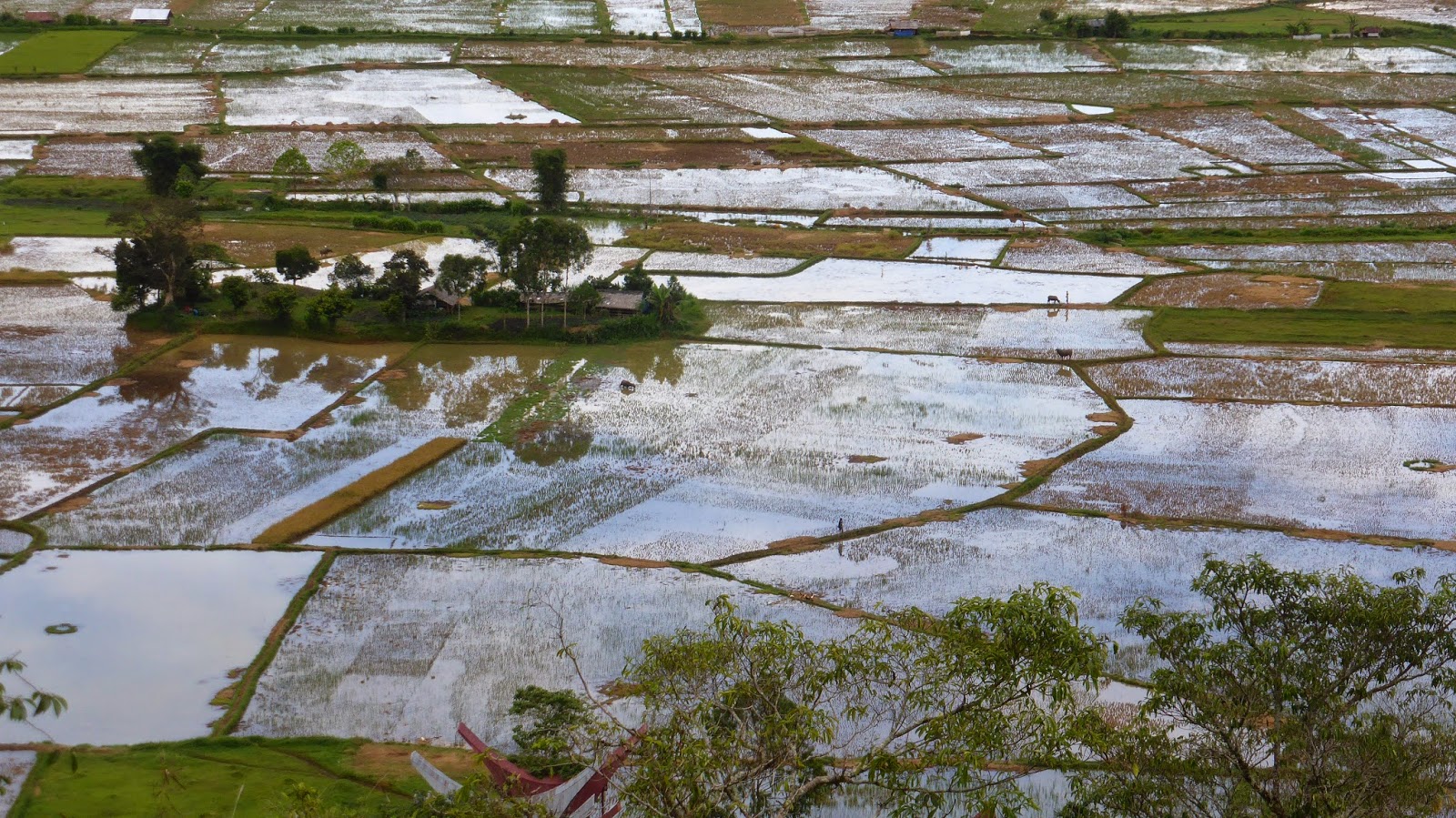
A few miles later the scooter got a puncture. We were in the middle of nowhere and the feeling of isolation struck immediately. But almost straight away a truck slowed and shouted out the window to Gustine, and to our total surprise we found there was a little shack just around the corner that did repairs. Even more surprising was that the guy got onto it straight away, stripping down the back end of the bike to remove the wheel and tyre and fit a new tube. Just £2 worse off, we were soon on our way feeling amazed at how quickly a big issue can be solved sometimes. We headed up into the mountains for an hour or so over bumpy tarmac and sometimes muddy bits of track, passing through more small villages and roadside graves carved into giant rocks. The best part lay further ahead though when the trees cleared beside the road and revealed huge sections of rice terraces built into the hill. It was the stuff of postcards apart from the fact it was raining, and I was a little awestruck by the sight of the hundreds of different levels of paddy fields.

The Torajan wedding we attended, surrounded by traditional rice barns

Buffalo Fighting
Gustine had been told through friends of her parents of a local buffalo fight going on one day; another part of the intricate funeral ceremonies the Torajans have, and she lead us there by scooter. Arriving quite early, the locals welcomed us into the courtyard at the centre of events and we sat under one of the many traditional rice barns, watching pork being boiled in huge vats for lunch. We'd visited a buffalo fight at a couple of days before but the fighting had finished just as we arrived, which now made this the third funeral ceremony we'd visited in as many days! 

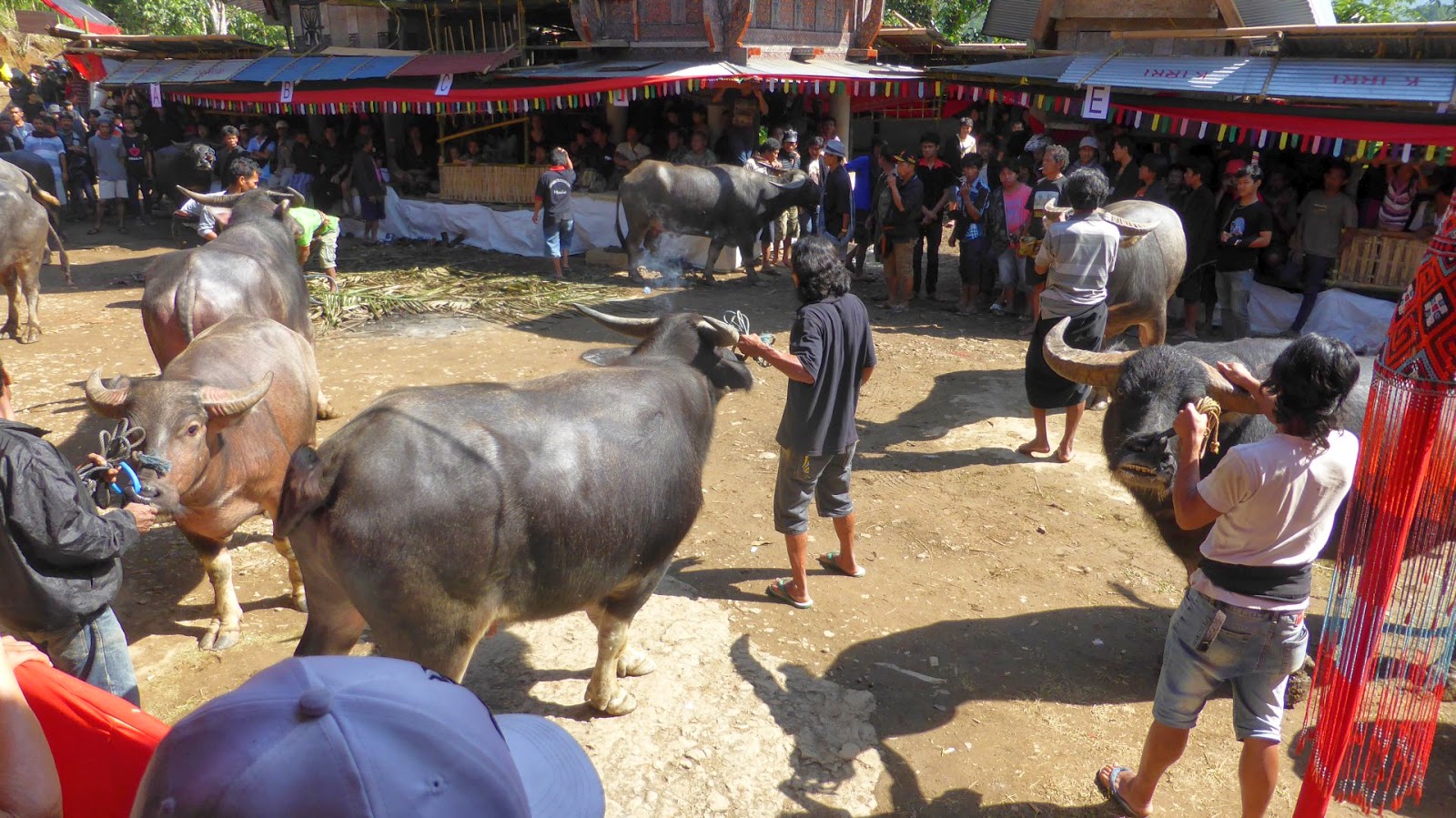
The proceedings started with the fighting buffalo being led in to the main courtyard for people to see, haltered by rope throes the nose and controlled by what we presumed was their owners. One buffalo looked very angry as it passed us, and a local laughed when he saw tears running down it's cheeks - I think I'd cry if someone did that to me too! A traditional priest sang and chanted for quite a while in a near evangelical manner over the PA, in a special language not even the locals understood, and Gustine noted that the old guys near us were moaning that they were bored. With music playing, a long line of ladies next entered the courtyard, holding a long narrow piece of red cloth above their heads in the manner of a Chinese dragon, and danced slowly along for a few minutes to music, and at this point I suddenly realised what a unique and special event we were witnessing. Everyone present including family, friends, villagers and guests like us then got fed a fairly simple meal of rice, beans and the boiled pork we saw earlier, though the pork unfortunately turned out to be mostly fat and gristle. Gallons of strong home-made rice wine were then passed around to wash it all down, a bit of an acquired taste I decided after a couple of sips.


---

Fight time
An area below roughly the size of a five-a-side pitch had been prepared nearby for the buffalo fighting, and the crowd gathered round on all sides mostly unprotected from the 'contestants'. Owners led their buffalo in from both ends of the arena and simply let go of the haters and walked away. The buffalo usually then just stood there for a few moments, slowly gazing around at the crowd and wondering what was going on before eye contact was eventually made, some sniffing happened and they moved closer. Suddenly horns would lock together and the action began. The crowd started cheering, bets were made, and the buffalo went head to head forcing the other into the ground. Eventually one would break away and run off out of the arena, the crowd desperately jumping out the way whilst the cattle sprinted down the road or into the woods out of sight, and the one chasing would be proclaimed the winner. In one particular contest things moved very slowly and with nothing happening for a few minutes the owner went behind his buffalo, and square between the legs kicked his buffalo in the testicles with his bare feet! Brave but stupid, yet had the desired effect. It was all good fun to watch, and unlike the brutal sacrifice I'd seen a few days before there was no real harm done as far as I was concerned.

As if we hadn't seen enough already, later that afternoon we headed to Ke'te Kesu; a traditional village nearby to Rantepao town where we were staying, but in contrast to all the real-life-off-the-beaten-path sights we'd seen in the past few days, again it was touristy and soulless and just a bit disappointing to visit.

We ended up stayed in the Tana Toraja area a week since it was so beautiful and interesting, and the final day Gustine decided to meet us to see us off. I'm not exactly sure why, but dear of her, she cried as we got on the bus and headed off south to Makassar. We'd seen a fascinating culture with traditions seemingly well preserved on the whole despite the tourists who visit, had some free lunches (there IS such a thing), met some kind locals and seen some stunning countryside to boot. A perfect kind of travel experience.


Looking cosy on the scooter out and about in Rantepao

Market day in Rantepao 

Local farmers at the market

Live pigs just sold at market, ready to take home by motorbike


View over paddy fields


Eating lunch at the wedding with Gustine (R) and her friend

Traditional Toraja village, even if this one had been a bit ruined by tourism

Rice terraces up in the mountains

Ceremony in a courtyard surrounded by rice barns before buffalo fighting

Tuesday, 24 June 2014

Three Funerals and a Wedding - Part I

Rantepao, Sulawesi island, Indonesia (map)

In this blog: a mass buffalo sacrifice at a funeral, looking at cliff, cave and tree graves, and teaching English in a class


-------------------------------------------------------------


Typically beautiful Tana Toraja countryside

Thanks to the road chaos I reported in the last blog, we didn't manage to make it to our destination of Rantepao in one day. Instead, at midnight the bus dumped us off in a suburb of the town of Palopo where we had no idea where we were, where we could stay, or how we could get around. It felt a bit hopeless. A group of teenagers gathered around curiously, and one of them got their older mate with a car who quoted us a ridiculous price for a lift to Rantepao. He wouldn't negotiate, we walked off. Outside a university, a few students mingled at the gates and we hoped they might speak a little English. Instead one pulled out his laptop and we had the slowest conversation ever using Google translate which amounted to nothing, so walked off again. A couple of them finally caught up on their scooters and with a new understanding kindly gave us a lift to a guesthouse nearby. 

The next morning we still had little idea how to continue on, so walked along the road in the vain hope we might find something, when out of nowhere a share taxi pulled up and an old guy shouted 'RANTEPAO?' out the window. It all seemed legit, so we hopped in and were on the way. The van weaved up a steep road into the mountains, switchback after switchback and the scenery was stunning. This windy road was too much for a young guy who made the driver stop so he could vomit in the ditch. A couple of hours later the scenery changed as we reached a plateaux, and we knew we were in the area known as Tana Toraja. 

Torajans have a unique identity in Indonesia, being an ethnic group that are of originally said to have come from Burma before settling in the mountains, and their life revolves around death. To them a funeral is viewed the same way as a wedding is in Western society, with elaborate plans, money saved for years, and lavish ceremonies involving hundreds of people over many days. This, along with a very unique style of architecture and a love for buffalo makes for a fascinating place to visit - the sort of place you might read about in National Geographic, with traditions which surprisingly continue seemingly mostly unaffected by tourism.

Torajan funeral
The funeral sacrifice
Surprisingly, Torajans have no objections to foreign tourists visiting their elaborate funeral ceremonies. Whilst it might seem odd to want to go to a funeral of someone you don't know it was said to be a real experience, so intrigued, we took up the offer of hiring a guide for the day - Yacob - and went along. The three of us rode scooters half an hour south of town, passing through paddy fields and down country lanes, before turning into an anonymous looking farm track. We arrived at a sort of courtyard surrounded by beautifully made wooden rice barns, and were just in time for the days events - the traditional sacrifice of buffalo. I was a little hesitant about what this would be like, and rightly so it transpired. I've decided to leave out the more gory details of what I saw, but needless to say it's not pretty reading so feel free to skip to the next section. You've been warned!

Sacrificing buffalo is believed by the Torajans to help carry the spirit into the afterlife, and the number sacrificed depends on the deceased persons position in society - poor people will have just a few, rich people up to two hundred (plus maybe a few pigs, dogs and chickens), but in this case they had four pigs, and eleven buffalo, the meat of which is divided amongst everyone in the area, almost like a party bag at a child's birthday. 


---

When we arrived the pigs had already been killed, and they lay on the dirt floor with guys burning off their hair with blowtorches. It was the first time I'd seen that, but knew it was fairly normal practice so no problem. Buffalo, specifically water buffalo native to South Asia, were gradually being led into the courtyard and Yacob suggested we go to one of the specially built viewing areas 'as it can get messy', so there we went, along with about fifteen other Westerners including some particularly rude and irritating older French people. 

A slaughterman came out and not much happened for a few minutes. Locals spoke on the PA and it was decided that all of them would be killed. Suddenly the crowd gasped - the first buffalo had had it's throat slit and was staggering around with blood pouring out everywhere, and did so for nearly a minute before it collapsed, rolled about and wriggled for another couple of minutes before finally dying. I was totally and utterly shocked, and stood motionless with my shoulders tensed.

Now, I'm gonna sound like a mad animal rights activist here, which I'm most certainly not, but I am human and feel a bit of empathy for things. I have no objection to eating other animals, it's the natural food chain and has been going on forever. I've visited a number of slaughterhouses at home before and understand the process, I've seen many dead cattle, carcasses hanging, and seen chickens killed but never anything like this sacrifice. It was absolutely and completely brutal, barbaric even, the most cruel thing I've seen in my life. Animals should either be alive or dead, not suffering in a way like this - Indonesian law even says that but is flouted cause it's 'tradition'. If you're going to kill something, do it swiftly and properly, and stun if first if required.


---

I watched two more being killed, and this time just felt nothing but numbness. A few tourists had left. The fourth kill made me angry since the guy did such a poor job at the kill and it suffered even more; I was beginning to comprehend what was going on walked away briefly to calm myself down. The seventh buffalo collapsed for a while after having it's throat slit, then shockingly a couple of minutes later stood back up and wobbled around, still alive. The crowd let out a roar of delight as if watching a boxing match. I was infuriated at the slaughterman for doing a terrible job, but most of all I was angry beyond belief at the crowd of locals who took such it's glee in it's suffering. Amongst the noise I found myself shouting 'this is TOTALLY messed up' before walking off back to the motorbike, where I waited a few minutes then drove off to the main road.

Cars and motorbikes reeled out after a half an hour or so, and feeling calmer I went back to find Rene. They were now butchering the animals on the dirt floor, a huge crowd of blood-covered men with machetes. This bit I could cope with as it was just butchery, though far from hygienic with meat, guts and dung all left contaminating each other. Rene was where I left him and said he was close to leaving but just held it together. Was it just me being soft I thought? I emailed a friend that night who works in an abettor just to get her thoughts -  she replied with the honest opinion that it was was wrong, cruel and shocking, and most people in their abettor would be feel the same. An event I will never forget.


Traditional Torajan village our guide Yacob took us to, wher the locals hadn't
been corrupted by tourist money
Exploring
We headed off by scooter, still feeling a little shocked but trying to put it behind us even if the theme of death still continued. The countryside was beautiful, more rice fields with tree covered hills between and Yacob led us to a sight called the baby graves. Believe it or not, Torajan tradition dictates that if a baby dies it is buried in a tree. Certain trees are nominated, and specialists chisel their way into the tree to provide a recess where the bodies are placed wrapped in cotton in the foetal position, after which the opening is then hidden by stringy bits of palm tree. It was fascinating to learn, and the practice still continues today apparently. 

Equally unique is the way adults are buried, which depends again on their wealth and position in society. A couple of miles away we were led to a cliff face where there were a number of wooden doors in the rock, which it transpired were also graves - those that can afford it have a coffin sized opening chiselled into the rock where they are laid to rest. In some cases though, the whole family is placed in a specially built concrete vault, and in past times were just left in coffins on the floors of caves. Fascinating, but more than enough death for one day.


After the English class I 'taught' (the v's aren't a swear sign in Asia by the way)
Teaching
I spent two half-days in Toraja sat in sweaty noisy Internet cafés, designing a poster and tickets for the young farmers ball I have a connection with at home, and during this time Rene went exploring the area and met Gustine; a very sweet and innocent 21 year old local girl whilst walking up to a viewpoint. She's studying English at the local university, but also teaches an English class to young kids and after they got chatting she asked if Rene would teach one day. He agreed to it, only on that day to come down with shingles (which cleared up in just a few days) so I willingly took the reins instead. 

Gustine picked me up at the hotel on her scooter then made me do the driving to her family home where she teaches the class. It was a pretty basic little cottage in a poor neighbourhood in the outskirts, and as we rounded the corner the sound of 'yaaaaaaayyy' filled the air from a string of enthusiastic young kids running into the house. I had no ideas for what I was going to do, nor did Gustine really so I made it up as I went along with the help of a simple text book. I pointed at objects or colours in the room and asked them to say the English name, I said words and asked them to spell them, I pulled faces and asked them to describe my mood - these sorts of things. There was about fifteen kids, all around 7-10 years I guess and some were pretty darn good. They were a happy smiley bunch and really enthusiastic to learn. Gustine told me she teaches them six days a week for an hour, and with only a couple of parents actually chipping in any money essentially does it for free which I thought was very kind hearted of her.

Next: A cattle market, buffalo fighting, a wedding and more 


Just before the sacrifice
The baby graves
In a simple country warung (cafe) where meatball soup cost us 60p each
Cliff graves, including one in construction
Rice harvest 


Gustine (2nd left) with her uncle (left) and parents in their kitchen

Sunday, 22 June 2014

A Bridge Too Far

Tentena to Palopo road, Sulawesi Island, Indonesia


It all started off so nicely

It was like being part of a Top Gear Christmas special, except it wasn't faked and we were both cast and cameramen. A live version in fact, and enough of a drama that it's worthy of a blog in itself.

We'd been travelling down from the town of Tentena when we came across this scene, riding on a bus which almost predictably had left two hours late. We'd driven along steep windy hills, through roadworks, past little villages with white picket fences. Lucid green paddy fields lined both sides of the road at times as well as cocoa tree plantations, and people dried the freshly harvested grains and beans on tarpaulins in their front yards. The journey was all a bit slow but pleasant enough thanks to the scenery, until we reached a queue of traffic.

Something was up but we didn't know what. We could see the road turned to dirt ahead, and a lorry waiting to cross a bridge but nothing more. After fifteen minutes our bus moved on a few hundred metres to said bridge and the driver shouted something in Indonesian, after which everyone stood up and got off. We followed them, confused, and the bus drove on alone across the bridge. We then saw a sign and it made sense - the bridge had a fifteen tonne limit, and he didn't want the bus to end up in the drink below. Rene and I chuckled, this was a first!

However this was only the start of the story we discovered, as the other side the road had been ploughed up by builders who were preparing to build a new, stronger bridge. Two tracks lay in front - a temporary gravel one which was blocked by two broken down lorries, and an extremely muddy one which people were slowly attempting to make their way through, taking it in turns from both directions. Piles of steel for the bridge were dumped to one side, wooden shack houses lay to the other, and sixty or so people stood around watching the chaos that ensued. With our bus not able to pass along the muddy track, we had to wait for the lorries to be towed away so stood by the track watching and waiting.

Some very strange custom scooters came along with their loud exhausts coughing out clouds of smoke, whilst the bikers themselves all looked mean in denim with patches, and bandanas on their heads though were actually quite friendly - the 'Slankuters community' it said on their backs, whatever that meant. I say scooters, but they were weird monstrosities, some converted to sidecars, some more like racing cars, and one with two wheels on one side and six on the other. One was styled like an army tank, another had a barrel trailer behind. They looked totally and completely nuts - exactly like something Clarkson and co. would come up with on their show. They were very low to the ground which didn't bode well with the mud, and one by one went flat out into this track only to get stuck and need pushing and lifting out by their mates. It was hilarious, even to the guys themselves who were on some sort of roadtrip together.


Motorbike gang stuck in the mud

It was now the turn of a couple of people carriers who bumped their way through with a bit of speed, slipping and sliding left to right before successfully passing without much trouble. Another car needed digging out by onlookers, before a pair of overloaded motorbikes tentatively passed way through, wobbling along the way. A couple of curious chickens were now pottering around, only adding to this scene of madness. A van roared through flat out hoping the momentum would help, rocking violently through the first ruts then slowing for the dodgiest part - we were convinced he was about to roll, he was leaning over that much. On a steep drop he edged forward, with two guys stupidly standing under the side that looked like it would roll onto, and one wheel briefly lifted off the ground a little before going back down. He was now stuck. Some guys went and got a rope and tied it to the top of the van, holding it like a tug-of-war rope to stop him tipping, and eventually he worked his way out and continued on. 

The ruts were deep and slippery now and we'd waited quite a while. Despite the manpower available, and a shovel standing beside the road no-one had really bothered to help sort this mess and get traffic going. A couple of guys threw some small stones into the ruts but that was it. I was seeing the funny side of it all, but was a little annoyed that no-one was taking any responsibility, so for both a bit of fun and to try and encourage them to get off their lazy backsides and help, I got stuck in. 

---

I picked up a couple of largish rocks and placed them in a rut, then grabbed the shovel and dug for England trying to level out the ridges and ruts. The locals all found this hilarious as you might expect - it's funny enough for them to see a foreigner let alone one getting his hands dirty. After a few minutes another van decided to try and pass through, whilst at the same time another lorry turned up to tow away the broken down lorries. I looked at my hands to find I'd blistered off two pieces of skin - after all this time travelling my hardened rowing palms had now turned into soft girly hands it seemed! 

The gravel track was finally clear. The bus worked it's way through and the other side everyone hopped back on, moving on past by a huge queue of traffic that had built up. I looked at the clock and realised two hours had passed, but finally we were on the way again, with a grin on our faces and a story to tell.


Getting stuck in!
Custom scootercar
Get out and walk
Crazy scootercars

It almost rolled

Wednesday, 18 June 2014

Batman

Tentana, Sulawesi island, Indonesia (map)

In this blog: a change of island, some slow journeys, scootering around a beautiful area, and eating bat.


-------------------------------------------------------

Before I start I want to make an acknowledgement - these blog posts are long! I realise many people can't keep up and have to dip in and out of them, but I like to write it how I see it, and give the full picture of the journey to show it's an experience rather than just a holiday, so thank you regular readers (5 to 25 people a day it says) for your patience, and for reading it full stop! They take ages to write so I hope you find them as well written rather than boring, and continue to enjoy them wherever you are.

-------------------------------------------------------

Sulawesi is possibly the craziest looking island you've ever seen - from above it looks something like an octopus run over by a truck (see map link above). But this craziness extends to activities on the ground as well; the food, people, rituals and chaos, and as you'll see over the next couple of weeks it's often a weird and wonderful place.

After two months on Borneo, we took a flight across the Malassar Strait to the Central Sulawesi city of Palu, arriving at nearly midnight after a nearly two hour delay with Lionair. I'd accidentally (honest guv') left my Swiss Army knife in my hand luggage, and had it confiscated by security when boarding in Balikpapan, so after reclaiming it at customs in Palu, we grabbed a taxi into town and at 1am after three attempts, finally managed to find a guesthouse that was open, even if it was a bit of a dive. 

---

Palu
The graffiti was the only interesting thing about Palu
Rene and I only had a vague idea of where we wanted to go in Sulawesi, so the next morning after a couple of hours research and planning, we realised Palu had nothing to offer us and tried to get out of there as quick as possible. With no bus station and only share taxi services scattered around the suburbs it was easier said that done though especially as no-one spoke an ounce of English, and it took a lot of walking and asking around ('bis Tentana?') before we finally found a ride, even if it did leave four hours later. 

We took a stroll through town. It was hot but a more pleasant dry heat in contrast to Borneo, and the open sewers beside the road sometimes stank as we headed to the waterfront, which itself was no better with a the sandy beach covered in rubbish and lined by street stalls on one side and dirty seawater the other. This was no tourist town. We turned down a small road and found ourselves walking through a small karaoke street party, where people were very supposed to see us and waved away, and a lady grabbed Rene's nose. This happened to me as well a few weeks before and we learnt that our Caucasian noses are quite a novelty, being long and narrow compared to the short wide Indonesian nose! Eventually we found seemingly the only nice place in the city to relax and wait a couple of hours, before we were finally on our way.

---

On the road
The share taxi almost predictably left nearly an hour late - a people carrier 'kevved up' with a big exhaust, and for no particular reason except coolness or maybe because they considered it 'too safe' - they'd removed the airbag, headrests and seatbelts. Perfect! The scenery was noticeably different to Borneo, and a bit of reading soon told me that whilst Borneo was once part of the Asian continent, Sulawesi has been proven to have formed from landmass from both Asia and Australia and thus had some of the flora and fauna of both. No kangaroos though! A few cultural differences were also noticeable, such as the sight of herds of three or four cows grazing on the roadsides and feral dogs roaming as they please, often looking a bit mangy. We climbed windy mountain roads through rainforest clad hills, past small roadside produce stalls, before descending to the plains. The driver decided to take an hour and a half dinner break to chat to his friends, and we impatiently sat waiting whilst curious local kids spoke phrases of English, took our pictures and gathered to look in curious amazement as I, ahem, read a book. Eight hours later we finally reached the town of Tentena and arriving late at night for the second day in a row, had to do a lot of doorbell ringing before we found a bed.

Tentena is a smallish town set beside the largest lake on Sulawesi, and with a bit of altitude and a nice breeze is pleasant with it. It's hard to call it a beautiful place as few towns we've seen in Indonesia are, but it's certainly got some character with mountains all around, picket fences in front of houses, and many green areas. There are also more Christian churches than one community can possibly need - I've never seen so many in one town, though this strong belief caused all manner of conflict with other Muslim-dominated neighbouring regions just a few years ago and many people died in clashes.

Kooky Canadians
---

Scooter scouting
There wasn't much to see in walking distance, so Rene and I hired a scooter for a couple of days to get out and about. A few miles in, the vague hand-drawn map the guesthouse had given us was a little ambiguous and we took a wrong turn, heading up windy roads into the mountains. We kindof knew it, but kept going anyway to see what we saw. Both sides of the road were covered by often dense jungle, but often interrupted by clearings locals had made either just for the wood or to plant cocoa trees; the dominant crop of the area. Road building was in progress and we passed some women breaking up rocks beside the road with hammers into gravel sized pieces, and men building walls. We eventually found ourselves in a quarry and turned backed back on the workers advice, stopping to look at the fantastic views below on the way, looking at primitive hut houses and small veg patches set back from the road, and taking in the sound of the wildlife amongst the trees. We may have been lost, but it wasn't a wasted journey.

Eventually we found the beach, which is slightly perplexing as you normally need waves to make sand - something noticeably absent on this lake, but the beach very nice anyway It was a great place for a dip - probably the warmest lake I've ever swum in, and we found what we thought was a deserted waterside cafe for lunch. Rene doesn't meet many Canadians on the road, let alone French-Canadians (since French is his first language, and English a close second) yet here in this deserted place we found three of them from Quebec eating a melon so he was a happy chappy. They were heaps of fun for the hour or so we chatted over lunch, them sometimes en Francais, and they told us a few stories from their travels before showing us really stupid funny videos they'd made of themselves along the way - dancing in streets or doing silly monologues. Québécois are renowned for their very unique and quirky sense of humour I learnt afterwards, and here was proof.

That night we went for tea with some Swiss girls who stayed at the hotel, and I ordered a fresh orange juice. To my surprise there were quite a few ants in the glass either desperately swimming around or dead so I politely complained to the owner. To our surprise and amusement, she walked off and came back with not a replacement but a spoon, and carefully fished them out before grinning and walking off. Still tasted good! An even more pleasant surprise was Skyping my Grandpa that night - at 89 years old, he went out and bought his first computer recently, learnt how to use it through books and advice, and now here we were having a face to face chat. You're never too old to learn.

---

Waterfalls and caves
On our second attempt at finding it the next day, we visited Terjun Salopa waterfalls, hidden ten miles from town along a rough lane. I'd see a photo before and it looked good, but nothing prepared me for the spectacular sight of it when we rounded the corner. It was a huge multi tiered affair with water cascading in consistent motion all the way across, indeed it was all so perfect it looked artificial, and with no moss on the rocks, we were also able to paddle amongst it. A beautiful spot to spend a couple of hours. The cafe back by the road advertised 'pyton soup', which we wondered whether was an Indonesian word or a misspelling. We asked the woman who pointed to a photo on the wall of a huge snake, before saying 'sorry, no python today'. Crickey!

Me ruining a photo of a nice waterfall
The stunning Terjun Salopa waterfalls
The scooter was a great way to get a feel of the area independently, as it can feel quite constraining sometimes just relying on public transport or the soles of your feet. We continued on and explored the town, visited a viewpoint with a fantastic panorama over the town and many nearby paddy fields, and finished up the day at a cave. It was dusk, and after walking a few hundred metres down a path through cocoa trees we got something we definitely didn't expect. Seeing the cliffs, I walked up some steps to a huge limestone overhang, to find not a cave you can enter and explore, but instead a shallow cave with piles of broken old coffins and a number of skulls lined up on rocky ledges. Actual human skulls. We were quite taken aback, but were aware burials around here are a little unconventional - as you'll hear in the next blog in no uncertain terms!

Bat 
The finish to our time in Tentena was a memorable one. That morning we'd popped into the local market for a look, and came across a huge section of freshly butchered bat meat. Yes, bat! 

It was a startling sight, but little did we know that that evening in a local warung (small cafe) we'd have the opportunity to eat it. It was a perverse temptation, I mean bats are scary things right, but the curiosity was too much and tentatively we went for it. There were just a couple of small bits of wing amongst it though otherwise you'd never know what you were eating, and the texture as ever was similar to chicken. But as far as taste was concerned, we guessed the burning sensation of huge amounts of chilli hid something just a little inedible without.

Breaking rocks by the road

Basic hut home up in the mountains

Rene and the beast

View over the local area

Rotovating rice paddies

Going home from work

Bat carcases - scary eh?!